In the tribune CFL Québec
CFL in Quebec: The $25 Million Figure That Completely Changes How We Read This Story
24 sept. 2026 · 29 vues
There is a huge difference between saying that a Canadian Football League franchise "would cost around 25 million dollars" and learning that 25 million dollars would already be part of the agreement negotiated between the league and the group that wants to bring a team to Quebec.
That is precisely the new information reported Thursday by Dave Naylor of TSN.
And it deserves closer examination.
According to Naylor's sources, the CFL is to receive a franchise fee of 25 million dollars as part of the arrangement concluded with William Trudel, the businessman identified over the past few days as the main driving force behind the Quebec project.
Pay attention to the words.
It still does not mean that Quebec officially has its franchise.
It does not mean either that William Trudel has already written a 25 million dollar cheque to the CFL.
But we may have just crossed an important threshold in understanding this matter.
Because we are no longer simply talking about interest.
We are beginning to talk about the financial terms of a transaction.
What Dave Naylor just added
Until now, several pieces of information were circulating.
FM93 reported that William Trudel was behind the project.
Commissioner Stewart Johnston had met with Trudel in Quebec.
A vote was said to have taken place on September 9 among the nine CFL governors.
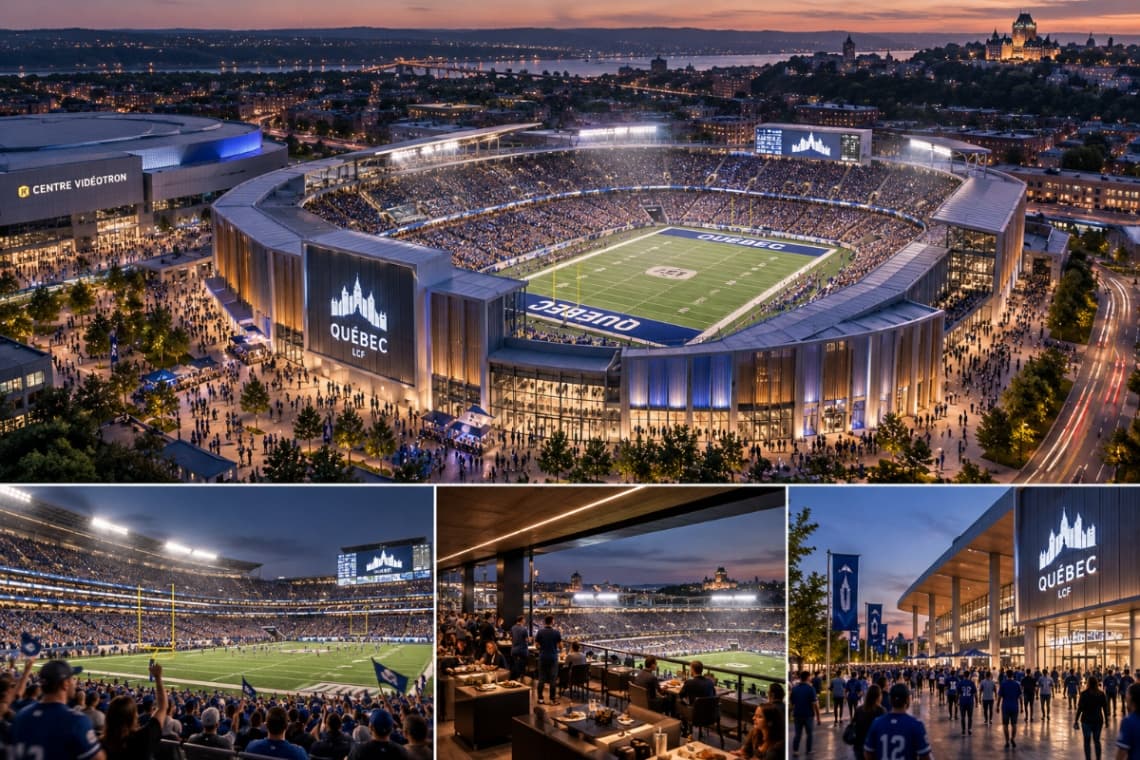
The project included a potential 25,000-seat stadium valued at 350 million dollars.
And the amount of 25 million dollars was already circulating as the cost associated with obtaining the franchise.
Naylor's new information is more precise.
His sources indicate to him that the league is to receive 25 million dollars as a franchise fee as part of the arrangement with Trudel.
The distinction may seem small.
It is not.
A theoretical price is one thing.
An amount that is part of an arrangement between a potential buyer and the league is another.
An approval that would be conditional
Naylor also provides important clarification on the famous September 9 unanimous vote.
According to his reporting, William Trudel received a unanimous conditional approval from the CFL board of governors.
TVA first reported the vote. 3DownNation subsequently confirmed with its own sources that only the principal voting members of the board — namely the owners or principal executives of the nine teams — were present. The CFL, for its part, has not officially confirmed that the vote took place.
The word "conditional" is probably the one to focus on.
Because it allows us to reconcile two realities that could seem contradictory.
On one hand, the matter appears extremely advanced.
On the other, the CFL continues publicly to say there is still nothing to announce.
Both can perfectly be true.
The CFL and Trudel may have already settled their part of the matter
This is where it gets particularly interesting.
According to Naylor, if the commercial arrangement between the CFL and its potential tenth franchise is indeed in place, it represents a major development and possibly the most advanced point the league has ever reached in its quest for a tenth team.
In other words, a significant part of the problem could already be virtually resolved.
Who is driving the project?
William Trudel.
Is the CFL interested?
Yes. It publicly describes Quebec as a "leading contender" among markets interested in expansion.
Would the current owners accept Quebec?
According to TVA and 3DownNation reports, the September 9 vote would have been unanimous.
What would be the franchise fee?
25 million dollars, according to Naylor's sources.
So we are beginning to be able to fill in several boxes.
But there remains one massive one.
The real problem costs $350 million, not $25 million
And that is probably where enthusiasm must be tempered.
The 25 million dollar franchise fee is not the main financial obstacle to the project.
The stadium is.
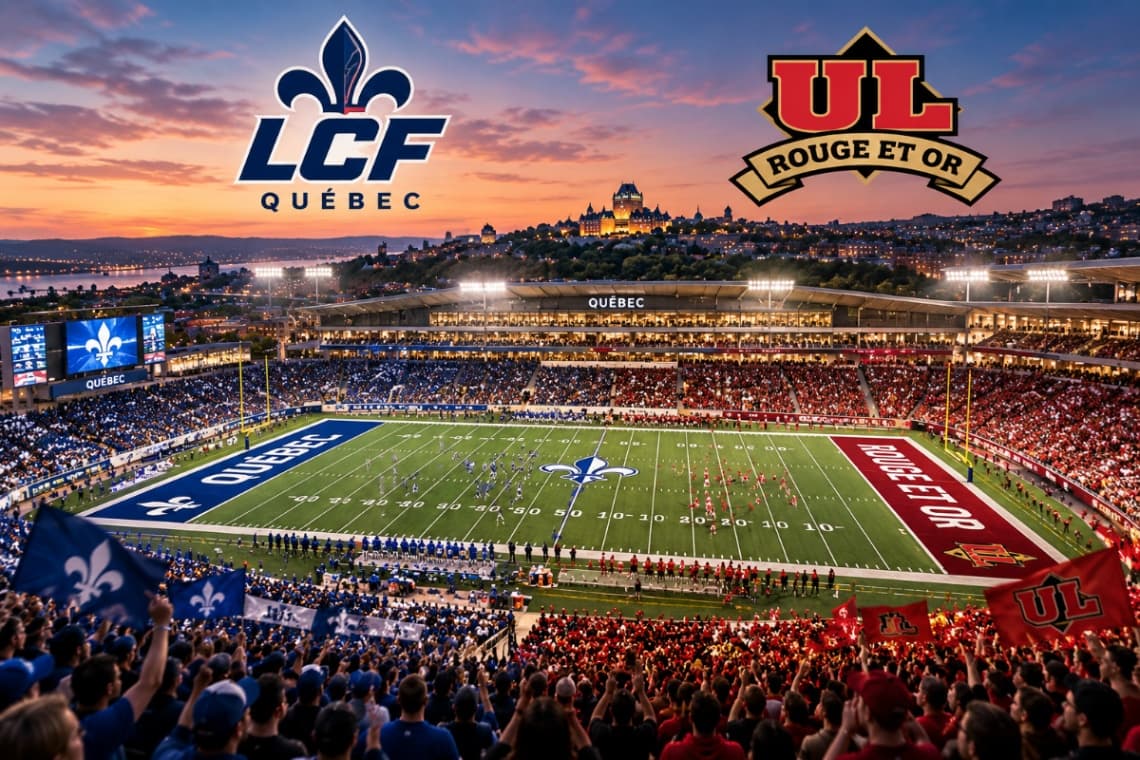
The scenario reported since June calls for a multipurpose stadium of approximately 25,000 seats, valued at about 350 million dollars, which would be built on the site of the Coliseum. During construction, the team could temporarily play at Université Laval's TELUS Stadium.
Naylor is particularly clear on this aspect: according to his analysis of the matter, it is the financing of the new stadium that will likely determine whether the tenth franchise actually comes to fruition or not.
And that is where the sports story risks quickly becoming a political one.
Because a 350 million dollar project immediately raises the question of public funding.
What portion would be private?
What portion would come from the City of Quebec?
What portion could be requested from the Government of Quebec?
Would Ottawa be approached?
For now, these answers are not known.
And the political timing becomes fascinating
There is another element raised by Naylor that deserves a lot of attention.
Quebec is currently in an election campaign and provincial elections will take place on October 5.
In this context, Naylor considers it unlikely that the government arrangements necessary to finance a stadium of this magnitude are already completely settled.
That could explain a lot of things.
Why does the CFL remain so cautious publicly when discussions appear so advanced?
Why does Trudel still refuse to comment?
Why do we talk about a conditional approval?
Perhaps simply because the toughest piece no longer depends solely on Trudel and the CFL.
It now depends on infrastructure financing.
$25 million: a lot or not much?
At first glance, 25 million dollars to enter a North American professional league may seem relatively modest.
But this amount obviously represents only the franchise fee.
One would then need to finance operations, hire staff, set up football operations, market the team, sell subscriptions, develop sponsorships and probably participate in some way in the infrastructure project.
One must also remember that an expansion creates something very valuable for the nine existing owners.
A new franchise enters their league.
It eventually shares national revenues.
It acquires players through an expansion process.
It receives a territory.
And in the case of Quebec, it would come to change the CFL's presence in a province where the Montreal Alouettes are currently alone.
The 25 million dollars is therefore much more than a simple purchase price.
It is the price of admission to the club.
Nine teams, $25 million: be careful with quick math
The temptation will probably be strong to take the 25 million dollars and immediately divide it among the nine existing teams.
That would work out to approximately 2.78 million dollars per team.
But we do not yet know how the CFL would treat or distribute the expansion fee from an accounting perspective.
It would therefore be premature to claim that Pierre Karl Péladeau and each of the eight other owners would directly receive a cheque for 2.78 million dollars.
What Naylor specifically reports is that the league is to receive 25 million dollars.
The final destination of this money remains to be clarified.
It is an important distinction.
Quebec still does not have its team
It must continue to be repeated.
The CFL has not officially announced a franchise in Quebec.
William Trudel has not publicly announced that he is becoming an owner.
The stadium is not financed.
No official launch date has been announced.
The league itself remains cautious. In its statement submitted to Sportsnet, it confirms having had very productive discussions with a serious and committed local group and describes Quebec as a leading candidate, but adds it has nothing more to announce for now.
Those are the facts.
But it would now be equally difficult to claim that we are still facing a simple rumour.
We are beginning to see the outline of a transaction
This is probably what has changed the most in the past 48 hours.
At first, we had a project.
Then we learned the name William Trudel.
Then we learned he had met with Stewart Johnston.
Then came the information concerning the governors' unanimous vote.
The CFL publicly recognized Quebec as one of the leading candidates for its expansion.
And now, Dave Naylor reports that a franchise fee of 25 million dollars would be part of the arrangement between the league and Trudel.
Each piece of information taken individually can be nuanced.
Together, they paint a picture of something much more serious.
The question seems increasingly less about whether William Trudel and the CFL can come to terms on a team in Quebec.
The question might now be much simpler — and much more difficult:
Can we finance the stadium necessary to make this agreement possible?
If the answer ultimately becomes yes, the famous 25 million dollars reported by Dave Naylor could eventually be remembered as one of the first figures that made it possible to understand that, this time, the CFL project in Quebec had truly moved into a different category.