In the tribune CFL Québec
CFL in Quebec: This time, the rumour is starting to look like a real project
24 sept. 2026 · 16 vues
In Quebec, we know the story well.
A professional sports project appears. Some information circulates. Fans get excited. Politicians show interest. Then months pass and the project quietly disappears.
That's precisely why we need to maintain some caution about everything surrounding the possible arrival of the Canadian Football League in Quebec.
But we also have to acknowledge something: this time, something different is happening.
And it's no longer just an impression.
The CFL itself now acknowledges having had productive discussions with a local group it describes as serious and determined. In a statement sent to Sportsnet, the league even called Quebec a "leading contender," making it one of the main candidates for a potential expansion. It notably cites the passion of football fans, potential corporate support, economic and demographic growth, and the possibility of creating a natural rivalry with Montreal.
That's already much more concrete than a simple rumour.
The famous September 9 vote
The most important information, however, is what was reported by TVA and picked up by several media outlets: on September 9, the nine CFL governors allegedly gave the green light to advance Quebec's bid.
According to 3DownNation, only the main voting members were present—the owners or executives of the nine current franchises. The media does specify, however, that a CFL spokesperson has not officially confirmed that this vote took place.
That distinction matters.
So we can't say today that Quebec officially has its franchise.
Far from it.
But if the information about this vote is accurate, we're no longer talking about a city simply trying to convince the CFL to listen. We're talking about a market whose candidacy has received the backing of the nine organizations already in the league.
And that significantly changes the nature of the file.
William Trudel enters the picture
The other major development concerns the identity of the group behind the project.
According to Sylvain Bouchard of FM93, real estate developer William Trudel would be the main businessman behind the initiative. Commissioner Stewart Johnston apparently even met with Trudel recently at a Quebec City restaurant.
Groupe Trudel has not confirmed this information. Its spokesperson David Chabot instead indicated that the company does not comment on rumours and would speak when there is something concrete to announce.
Again: caution.
But we've still come a long way from the scenario where someone publicly floats the idea of a team without a potential owner, without an infrastructure project, and without discussions with the league.
There appears to be a group.
There appear to be discussions.
There appears to be a plan.
And most importantly, there is a stadium project
This is probably what makes the whole story credible.
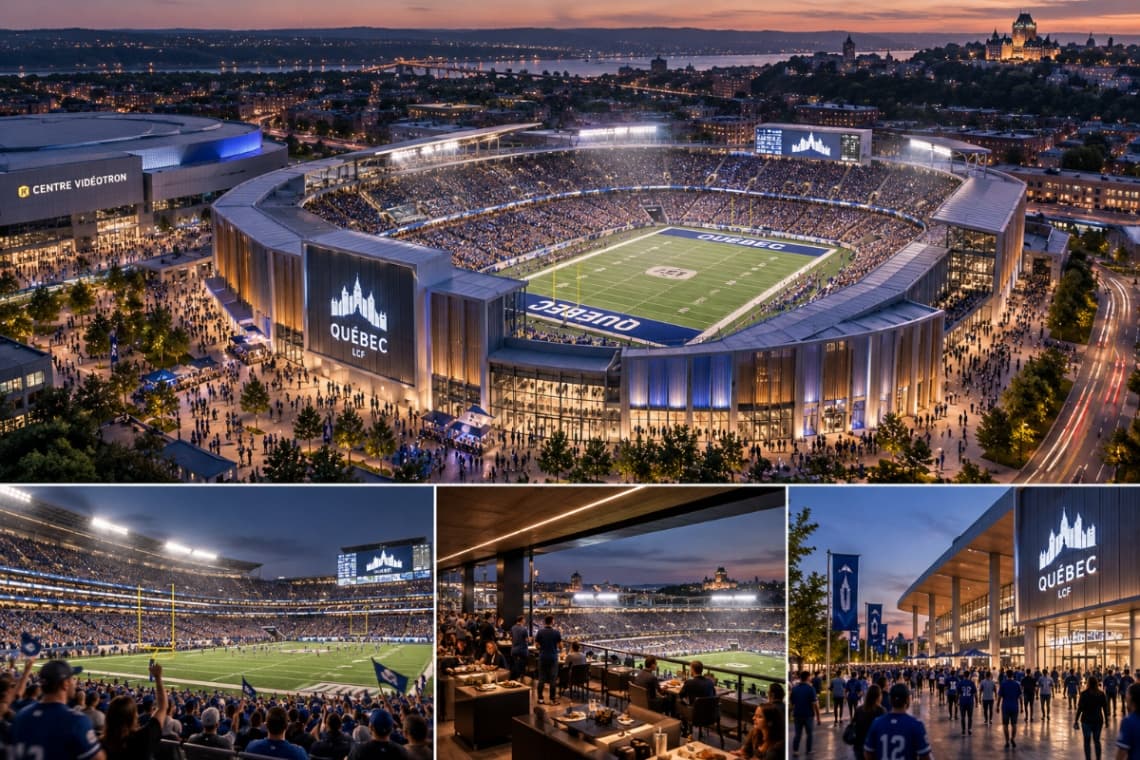
Since June, information from Sylvain Bouchard has reported a proposed outdoor stadium with approximately 25,000 seats, valued at around $350 million, that could be built on the site of the Quebec Coliseum.
The Coliseum is set to be demolished anyway, which would eventually free up an extremely interesting location near the Videotron Centre.
While awaiting construction, a team could temporarily play at Université Laval's TELUS Stadium.
Obviously, this wouldn't be a permanent solution. TELUS Stadium officially has 12,817 seats and can accommodate up to 18,000 people.
But for a season or two of transition?
Why not.
It would even allow the market to be genuinely tested before the new stadium opens.
2030 or 2031
According to FM93's information, the goal would be to launch the new franchise around 2030 or 2031. There's also talk of an initial cost of approximately $25 million to obtain the franchise.
This timeline seems much more realistic than a rushed arrival.
You'd need to build the organization, arrange financing, construct a stadium, develop the identity of the new team, sell season subscriptions, sign partners, and prepare the entire commercial ecosystem.
And most importantly, you'd need to transform current enthusiasm into a sustainable economic model.
Because that's where the project will eventually be judged.
Does Quebec really love professional football?
That's probably the most interesting question.
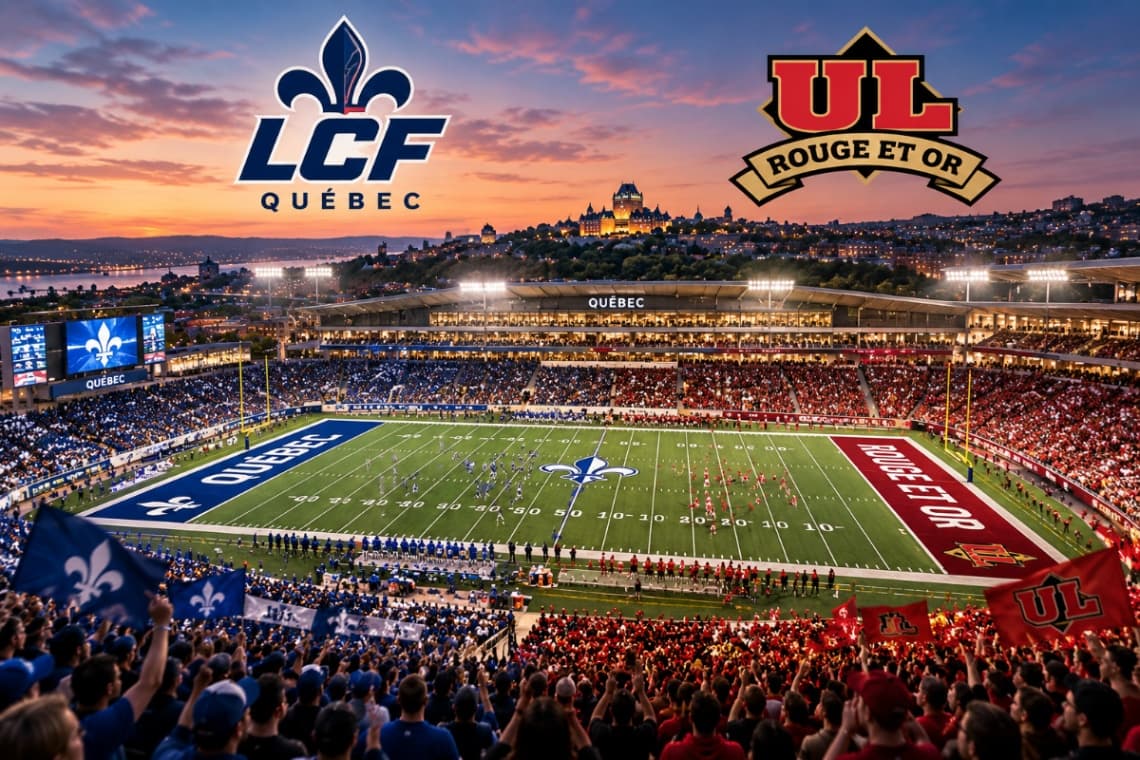
We often hear that Quebec is a football city because of the Rouge et Or.
That's true.
On September 19 again, more than 16,000 people showed up at TELUS Stadium for a university game against Sherbrooke.
But loving the Rouge et Or and buying tickets for nine home games of a professional team are two different things.
History actually invites some caution. According to 3DownNation, a preseason game between Montreal and Ottawa played in Quebec in 2015 attracted only 4,778 spectators. Another in 2003 drew 10,358 people.
Those aren't exactly numbers that guarantee a full stadium.
But it also wasn't a Quebec team.
And that difference is huge.
A real franchise has an identity, players, rivalries, a full season, and above all a sense of belonging that a preseason game occasionally imported will never create.
The rivalry with Montreal could change everything
That's probably the aspect I find most interesting about the project.
Quebec against Montreal.
Not once.
Two or three times a year.
Imagine a Montreal-Quebec game in front of 25,000 people in the capital, then the return game in Montreal.
For the CFL, that would be a natural rivalry it would barely need to manufacture.
And the league itself highlights this in its statement: a second Quebec team would strengthen its presence in the province while creating this rivalry.
That may be what really distinguishes Quebec from other markets being considered for expansion.
We don't have a team yet. But we finally have a file.
There are still enormous questions.
Who exactly are the investors?
What would the ownership structure be?
Who would pay for the $350 million stadium?
What would be the split between private and public funding?
Is the Coliseum site definitely retained?
And most importantly, will the CFL officially grant a franchise?
All these answers are still missing.
So it would be far too early to celebrate the arrival of a team.
But for once, the question may no longer simply be: "Does someone want the CFL in Quebec?"
It becomes rather: "Will we succeed in bringing together all the conditions for this project to happen?"
That may seem like a small difference.
In the history of professional sports in Quebec, it's enormous.